
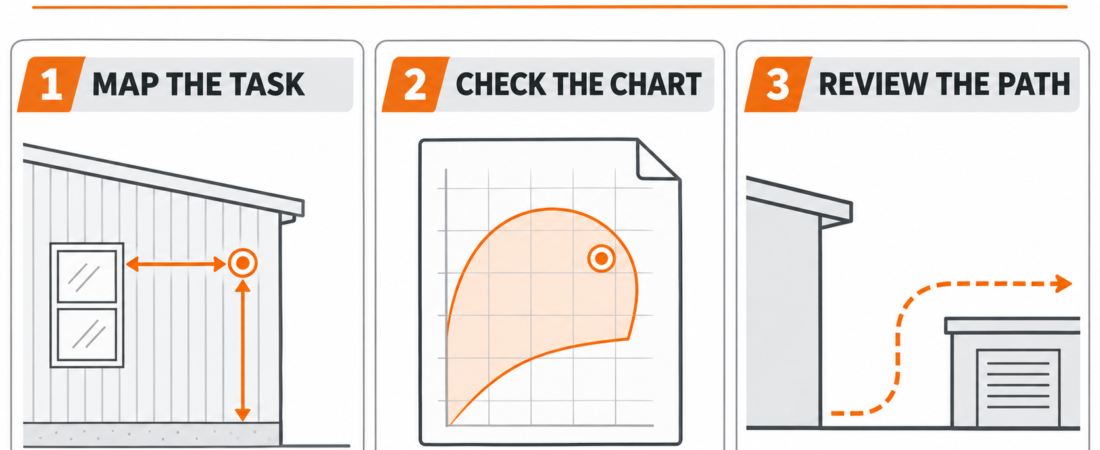
To check a boom lift working envelope, match the required platform position and total platform load to the correct model’s reach diagram. Review height and outreach together, using the diagram’s stated reference points. Then check the approach around obstacles and the proposed setup area. A point inside the diagram is only an initial reach check, not approval to operate.
Cover image: AI-generated educational schematic, not a real project photograph or a machine-specific reach chart.
For a boom lift rental enquiry, a headline height can narrow the search but cannot settle the choice. The practical question is whether the proposed machine can serve each work position from an acceptable setup location. This guide explains how to organise that review before committing to equipment.
What the working envelope tells you
A working envelope describes the combinations of platform height and horizontal outreach available to a particular machine. These are related coordinates, not two independent allowances that can automatically be combined. JLG explains this relationship in its manufacturer guide to boom lift envelope control.
Read the actual diagram rather than imagining a rectangle extending to both advertised maximums. Keep the site drawing beside it: one describes the task, while the other describes the machine. Neither document alone proves that the whole job is feasible.
1. Define the work positions before comparing machines
Give each task position a reference such as A, B or C. A long pipe run, several light fittings or different sides of a structure may require several positions rather than one representative height. Record the work itself, not simply the building height.
- Mark the task location on a dated photograph or elevation drawing.
- Identify the ground or floor level used for the height measurement.
- Show the proposed machine setup zone and its relationship to the task.
- Mark intervening structures, projections and areas where setup is not permitted.
- Identify measurements that are estimated and assign someone to verify them.
Do not silently treat task height as platform-floor height. Ask the equipment reviewer to establish the platform position needed for the work and to relate the site measurements to the manufacturer’s definitions. Avoid adding an assumed universal reach allowance.
2. Obtain the diagram for the exact proposed configuration
Ask for the proposed model, relevant configuration and its applicable specification sheet and operator’s manual. Record the document reference in the enquiry. If the rental proposal changes to a different model, repeat the check rather than accepting a description such as “same height class”.
Genie’s explanation of range-of-motion charts notes that machines with similar headline specifications can have different reach envelopes. It also explains that some diagrams distinguish capacity-dependent operating zones. The proposed machine’s own documentation is the reference; another model’s chart is not a substitute.
3. Match each position to the permitted load zone
Prepare a platform-load list covering the intended occupants, tools and materials. Ask the supplier to confirm how the proposed equipment and any accessories affect the applicable limits. Do not treat the largest capacity printed in a brochure as valid at every position.
For each task reference, have the reviewer identify the required position on the appropriate diagram and record the applicable zone. If a point cannot be confidently interpreted, leave it unresolved. Do not extrapolate beyond a boundary, round a borderline measurement in your favour, or assume a control system will make an unsuitable position acceptable.
JLG’s guide explains that certain machines offer different envelopes associated with platform-capacity choices. That is why a reach review needs both the position and the intended load, not just a maximum-height statement.
4. Separate reachability from the movement-path review
Use two separate questions in the review: “Can the platform reach this position within the applicable diagram?” and “Can the planned access and movement be carried out at this site?” A positive answer to the first should not be recorded as a positive answer to both.
Provide side and plan views where practical so the reviewer can consider obstacles that a single photograph hides. Ask for any unresolved checks on boom movement, surrounding clearance, supporting conditions and site controls to be listed explicitly. This planning record is not an operating method, a rescue plan or permission to begin work.
A reusable position-by-position review record
Create one line per work position using these fields:
- Task reference: what must be reached and the matching photograph or drawing.
- Setup reference: proposed standing area and the measurement origin.
- Required position: height and horizontal offset, with units and verification status.
- Platform load: the planned occupants, tools and materials.
- Equipment evidence: exact model, configuration and diagram reference.
- Review outcome: reach not demonstrated, further information required, or reach provisionally matched.
- Open site checks: the unresolved item, responsible person and required response.
For example, if position A appears reachable but position B has no verified offset, do not mark the entire job confirmed. Record A’s provisional result and leave B open. If the setup area later moves, reassess every affected position. These are illustrative review situations, not claims about a completed project.
What to send with the enquiry
Send the labelled task views, setup sketch, measurement record, load list, location and intended work dates together. Ask for a position-by-position response and the applicable equipment documents, rather than only a quotation stating a height category.
GIGAMACH SDN BHD’s boom lift rental service in Selangor is the related service destination for this requirement. For mainly vertical access, the separate scissor-lift measurement guide covers its different enquiry needs. You can send the available site information for discussion; equipment availability and suitability remain subject to review.