
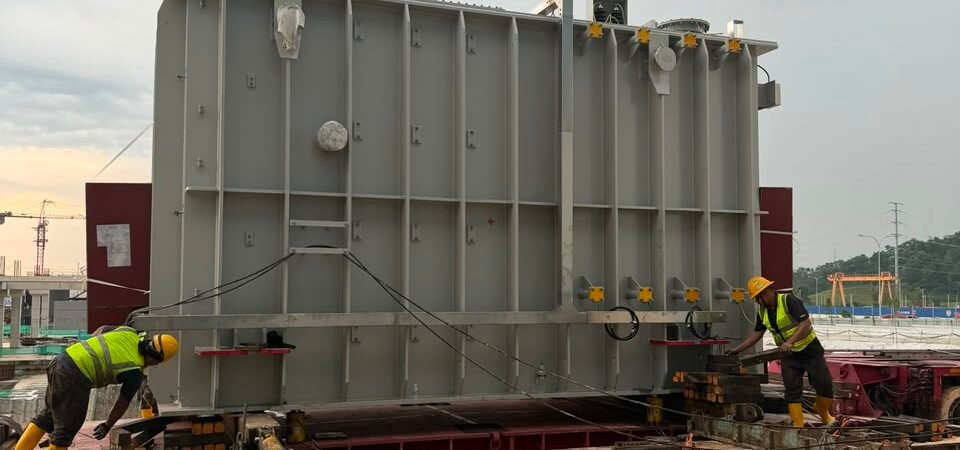
Prepare a machinery unloading area before delivery by confirming the machine and vehicle data, checking the approach and stopping position, verifying the supporting surface, clearing the transfer path, defining exclusion and staging zones, and confirming the receiving sequence. The unloading method should be reviewed against actual site conditions before the vehicle is released to the work area.
An unloading area is not simply an empty space beside a truck. It is the point where the machine, vehicle, handling equipment, ground and receiving route must work together. A clear readiness review helps the project team identify missing information before delivery, when changes are usually easier to manage.
Why the unloading area must be planned as one system
During unloading, the load transfers from the vehicle to a crane, forklift, skidding system, lifting arrangement or a coordinated combination of equipment. The standing position of the vehicle affects alignment. The surface affects support. The transfer path affects clearances and turning room. The final destination affects the sequence in which the machine should be received.
For that reason, Gigamach planning treats unloading as a controlled transfer rather than an isolated lifting action. The featured photograph for this guide is from a real Gigamach transformer-unloading work area and shows why the surrounding area, not only the load, matters.
1. Confirm the machine and delivery information
Start with verified information about the item being delivered. A useful unloading review normally needs:
- Machine description, dimensions and verified weight
- Known centre of gravity and suitable handling or lifting points
- Fragile projections, removable parts and restricted contact areas
- Vehicle or trailer type, deck height and intended orientation
- Expected delivery sequence when several items will arrive
- Target unloading position and final installation destination
Do not rely only on a general equipment name. Two machines with similar functions can have different footprints, handling points and balance. Where information is uncertain, mark it for confirmation instead of turning an assumption into a lifting decision.
2. Check the vehicle approach and stopping position
The delivery vehicle needs a practical route from the site entrance to the unloading point. Review gate width, turning space, overhead restrictions, gradients, parked vehicles, temporary works and traffic interaction. The intended stopping position should allow the vehicle to align with the selected transfer method without creating an unnecessarily long or obstructed load path.
Confirm where the vehicle will stop, how it will be immobilised, where the cab and trailer will sit, and whether other site traffic must be temporarily controlled. The area should also leave suitable access for the handling equipment and the people assigned to coordinate the work.
3. Verify the supporting surface and surrounding conditions
A surface that looks level may still contain covers, trenches, edges, soft shoulders, underground constraints or recently backfilled areas. Record the visible condition and identify any location that requires further assessment by the responsible site parties.
The review should consider the delivery vehicle, the planned handling equipment and the load at the same time. Mark potential setup areas, support locations and travel paths on a current site photograph or simple drawing. If the condition cannot be confirmed before delivery, the work plan should include a hold point rather than assume that the area is suitable.
4. Clear the transfer route to the receiving position
Measure the route from the trailer to the staging or final position. Check the narrowest width, lowest overhead clearance, door openings, corners, slopes, floor transitions and space needed to turn or realign the machine. Remove loose materials and identify fixed obstructions that cannot be moved.
Also confirm whether floor, wall, door or equipment protection is required. The route should be prepared for the actual machine footprint and movement method, not only for workers walking through it. Where services must be isolated or disconnected, the responsible parties and completion status should be recorded before unloading begins.
5. Define working, exclusion and staging zones
A useful unloading-area layout separates different functions instead of allowing the whole area to become one uncontrolled workspace. Mark:
- The delivery vehicle standing area
- The handling-equipment setup and operating area
- The planned load-transfer path
- The exclusion zone around the transfer
- A safe team briefing and observation position
- A staging area for removed packaging, supports or accessories
- An emergency-access route that must remain clear
The layout should make it obvious where unrelated workers and vehicles must not enter. It should also avoid placing tools, packing materials or temporary supports where they could obstruct movement.
6. Confirm the receiving sequence and responsibilities
Before the truck arrives, decide who confirms site readiness, who coordinates the delivery vehicle, who leads the unloading activity and who accepts the machine after transfer. When several machines are involved, the order should match the available staging space and the destination-readiness plan.
A short pre-delivery review can use three simple readiness states:
- Ready: information and site condition have been confirmed.
- Conditional: a named action must be completed before unloading.
- Hold: a critical detail or condition remains unresolved.
This makes unfinished actions visible and helps prevent an arrival schedule from being mistaken for authorisation to proceed.
Information to send for an initial unloading review
Useful first information includes load dimensions and weight, handling-point details, vehicle information, photographs of the entrance and unloading area, the route to the destination, floor or ground details, the required delivery date and the intended final position. A short video of the approach route can also reveal corners and clearance changes that are difficult to show in one photograph.
For the related service scope, see Machinery Loading and Unloading Services. You can also send the available job details through the Gigamach contact page or review more industrial planning guides in Insights.
Common unloading-area preparation gaps
- The vehicle type is known, but the deck height and machine orientation are not.
- The unloading space is clear, but the route to the destination is blocked.
- The surface is assumed suitable without checking covers, edges or underground constraints.
- The machine weight is available, but the handling points and centre of gravity are unclear.
- The delivery time is booked before the receiving team and destination are ready.
- Packaging removal is planned, but no controlled staging area is assigned.
Finding one of these gaps does not automatically mean the delivery must be cancelled. It means the issue should be resolved, assigned or formally held before the transfer starts.
Frequently asked questions
Can the unloading method be selected from machine weight alone?
No. Weight is only one input. Dimensions, centre of gravity, handling points, vehicle arrangement, access, surface condition, available working space and the required final position can all affect the method.
Should the final machine position be ready before delivery?
It should be reviewed before delivery, even when the machine will first enter a staging area. Confirming destination readiness helps the team avoid unloading the machine into a position that blocks the next movement.
What happens if the site condition changes on the delivery day?
Pause the activity and compare the changed condition with the planned method. The unloading should continue only after the affected access, support, equipment, route and coordination requirements have been reassessed by the appropriate responsible parties.
Prepare the area before the vehicle arrives
A practical unloading plan connects verified load information with the actual receiving site. Preparing the approach, standing position, support conditions, transfer route, work zones and destination in advance gives the team a clearer basis for selecting and controlling the method.