
Quick answer: A factory relocation equipment register should give every machine a unique ID and record its origin, destination, verified weight and dimensions, utility status, dismantling scope, handling information, move sequence, responsible contacts, readiness status and handover requirements. It becomes the shared control document connecting production, facilities, lifting, packing, transport and installation teams.
A normal fixed-asset list is useful for ownership and accounting, but it rarely contains enough information to coordinate a physical move. A relocation register is different: it shows what must happen to each asset, who owns each action and what information is still missing before the asset can enter its move window.
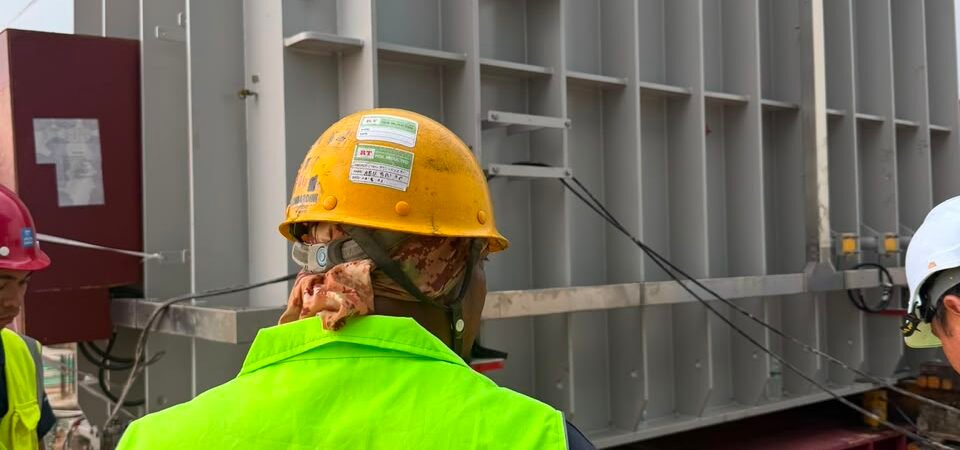
The featured photograph shows a Gigamach transformer unloading operation. In a multi-asset relocation, current photographs linked to unique register IDs help teams identify the correct equipment and track changing site conditions.
Why an ordinary asset list is not enough
During a factory relocation, several workstreams can affect the same machine. Production may control the shutdown date. Facilities may control isolation and disconnection. A machinery-handling team may need confirmed weight, lifting points and route information. Packing and transport teams need dimensions, protection requirements and the delivery sequence. The destination team must confirm the final position and readiness for reassembly.
If each team keeps a separate list, changes can be missed. One controlled register gives the project a common reference and makes gaps visible before work begins.
What fields should the equipment register contain?
1. Unique asset ID and clear equipment name
Assign one reference that stays with the machine through dismantling, packing, loading, transport, unloading and final positioning. Record the equipment name, manufacturer and model where available.
2. Origin and destination position
Record the current building, production area and position, then the intended destination building, line and final location. Use layout references that the site team understands. “Move to new factory” is not precise enough for sequencing or positioning.
3. Verified weight and overall dimensions
Record the best available weight and dimensions together with the information source, such as an equipment document, nameplate, drawing or other verified record. Note transport dimensions separately if guards, platforms, tanks or other sections will be removed.
4. Photographs and identification views
Attach current photographs showing the complete machine, access sides, base, connection points, surrounding route and any removable sections. Label the photographs with the same asset ID.
5. Utility isolation and disconnection status
List the relevant electrical, pneumatic, hydraulic, water, exhaust, data or process connections that the authorised site team must address. The register should show the responsible party and status without turning the register into an isolation procedure.
6. Dismantling and loose-part scope
Identify which components must be removed for access, protection or transport. Record how loose parts, cables, hoses, guards and fixtures will be labelled and kept with the correct asset. Include the person responsible for confirming that dismantling records are complete.
7. Handling information and unresolved questions
Record known handling points, base condition, centre-of-gravity information and manufacturer instructions where available. Keep unverified assumptions clearly marked as questions. The final handling method should be based on reviewed load information and actual site conditions, not on a spreadsheet entry alone.
8. Route and access constraints
Reference the surveyed route from the machine position to the loading area and from the delivery point to the final position. Note doors, turning areas, floor changes, headroom, gradients, surface protection and any planned temporary removal work.
9. Packing and transport interface
State whether the asset needs wrapping, skidding, crating, weather protection or special support. Record the planned transport orientation, any removed items that travel separately and the delivery identification required at the destination.
10. Move window and dependency sequence
Give each asset a planned move group or window, not just a date. Identify dependencies such as production shutdown, isolation completion, route release, packing readiness, vehicle access and destination clearance. This helps the team see which item could delay a complete move group.
11. Responsible contacts and approval points
Name the owner for production release, utilities, handling coordination, packing, transport, destination acceptance and reassembly. Responsibilities should be clear enough that an open question has an owner and a due date.
12. Destination readiness and handover requirements
Record the agreed final orientation, operating clearance, foundation or floor readiness, connection status, levelling or alignment needs and the party responsible for commissioning. A machine should not leave the origin while a critical destination condition remains unknown.
Use simple readiness states
A long register becomes easier to manage when every machine has a short status supported by specific open actions:
- Awaiting information: essential load, route, scope or destination data is missing.
- Under review: information is available but the method or interface is still being checked.
- On hold: a named dependency prevents the planned move window.
- Ready for coordination: required information is available for the detailed work review.
- Moved and awaiting handover: the asset is positioned but completion responsibilities remain open.
- Closed: the agreed handover records and responsibilities are complete.
“Ready” should never mean that a register entry replaces a site survey, task briefing or reviewed work method. It only means the agreed information and dependencies are available for the next stage.
Review the register at four project points
- Initial scope review: establish the asset population and identify missing information.
- Pre-move coordination: confirm move groups, dependencies, route readiness and responsible parties.
- Move-window release: verify that the correct asset and destination are ready before work starts.
- Handover review: close outstanding positioning, connection, documentation and acceptance actions.
Common register problems to avoid
- Using the same description for several similar machines without unique IDs.
- Recording estimated weights as if they were verified.
- Listing a destination building but not the exact final position or orientation.
- Changing dates without updating dependent packing, transport and destination activities.
- Saving photographs separately without asset references.
- Marking an asset ready while route, utility or handover actions remain open.
- Allowing several uncontrolled copies of the register to circulate.
What should you send for an initial factory relocation discussion?
Start with the equipment register even if some fields are incomplete. Highlight the missing items instead of guessing. Include available equipment photographs, origin and destination layouts, the preferred move period and the contact responsible for technical clarification. This gives the relocation team a practical basis for questions and site review.
For coordinated multi-machine planning, review Gigamach’s Factory Relocation service. You can also send the available project information or browse more industrial planning guides.
Frequently asked questions
Can the register be a spreadsheet?
Yes. A controlled spreadsheet can work well when it has one owner, clear status definitions, protected key fields and a reliable change history. Larger projects may use dedicated project systems, but the required information remains similar.
Should small accessories appear in the same register?
Accessories that affect dismantling, packing, transport, reassembly or acceptance should be connected to the parent asset record. They can be listed as linked sub-items rather than separate major machines.
How often should the register be updated?
Update it whenever verified information, scope, sequence, readiness or responsibility changes. Review the latest controlled version before each move window so teams are not working from an outdated copy.