
Crane and Forklift Operations

GIGAMACH SDN BHD

Crane and Forklift Operations

Coordinated crane and forklift operations for loading, unloading, internal movement and industrial equipment positioning.
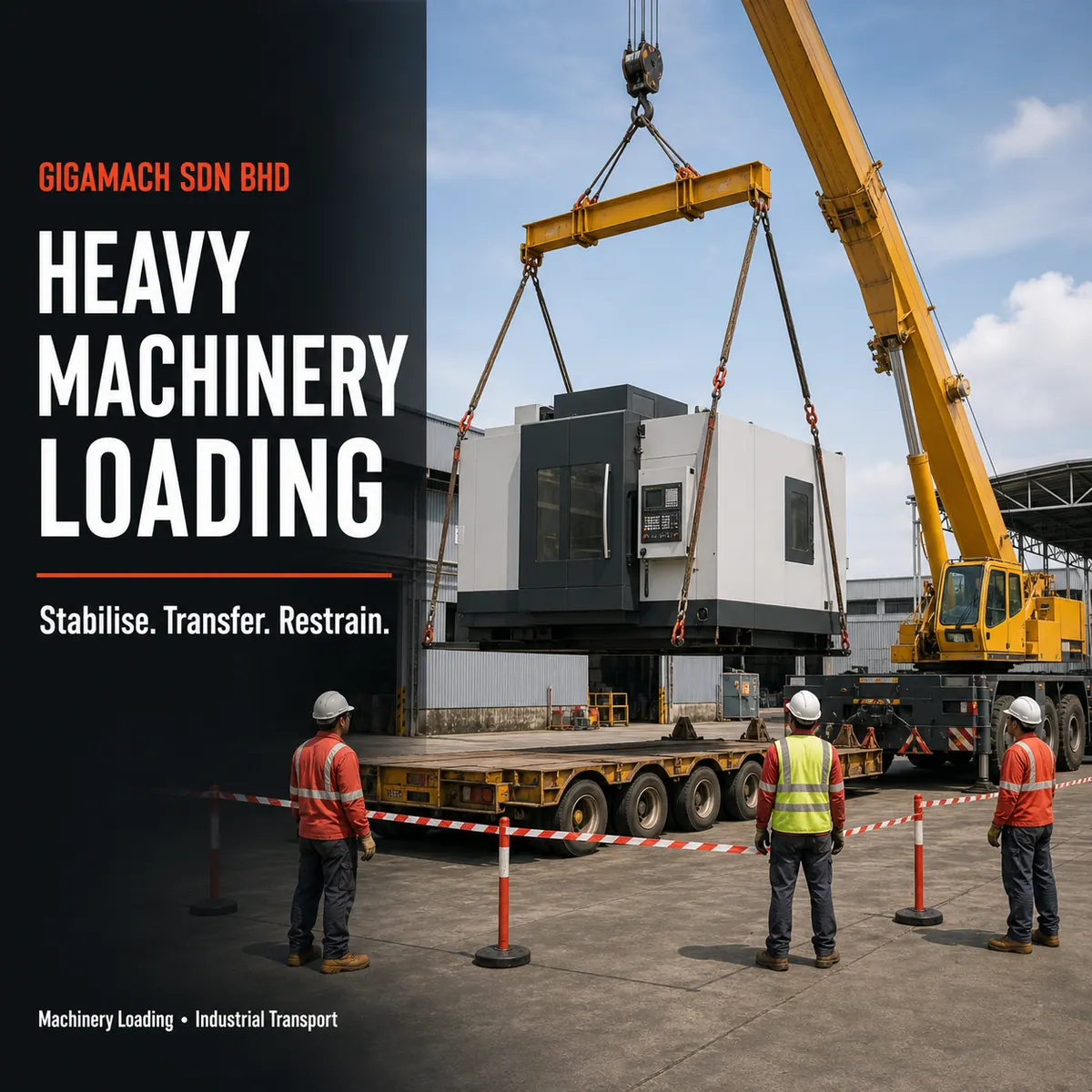
Coordinated crane and forklift operations for loading, unloading, internal movement and industrial equipment positioning.

When this service is useful

  • Loading and unloading industrial machinery
  • Supporting equipment installation and positioning
  • Moving loads through factory and logistics areas

How the work is planned

  1. Confirm load weight, dimensions, centre of gravity and handling points.
  2. Select suitable equipment, attachments and access routes.
  3. Separate pedestrians and unrelated traffic from the operating area.
  4. Use designated communication and controlled movements throughout the task.

Safety and coordination

Crane and forklift operations have different stability limits and operating controls. The handling method must suit the load, route and final position.

Actual equipment selection and work arrangements depend on verified load information and site conditions. GIGAMACH SDN BHD coordinates practical machinery handling, access and industrial transport requirements around the agreed scope.

Frequently asked questions

What information helps with an initial enquiry?

Share the work location, equipment type, approximate dimensions and weight, required date, access photos and the intended pickup or final position where available.

Can the method be confirmed from a phone call alone?

An initial discussion helps define the requirement, but complex work may need photographs, equipment data, a site review and coordination with the responsible facility team before the method is confirmed.

Discuss your project with Gigamach

Send the basic job details and available site or equipment photos for an initial discussion.

Related services

SERVICE ANSWER GUIDE

Quick answer

Crane and forklift operations use different load-control and stability principles. The correct method depends on verified weight and dimensions, centre of gravity, approved handling points, route and setup conditions, required reach or lift height and the final position of the equipment.

Information to send for an initial review

  • Load weight, dimensions, centre of gravity and handling points
  • Photos of the load, work area, route and final position
  • Required reach, lift height and access dimensions
  • Ground or floor conditions and nearby obstructions
  • Required date and whether loading, unloading or final positioning is included

How the requirement is assessed

  • Define the load and required movement.
  • Review equipment access, setup and route conditions.
  • Select a suitable crane, forklift, attachment or combined method.
  • Control pedestrians, traffic and communication during movement.

Service-area context: Malaysia. Availability and the work arrangement depend on the verified location, equipment and project scope.

Questions customers often ask

How is a crane or forklift selected for machinery handling?

Selection depends on the verified load, required reach or lift, handling points, equipment capacity at the working configuration, access, surface conditions and final position.

Can a forklift lift any load within its rated capacity?

Not necessarily. Load centre, attachment, mast configuration, lift height, stability and site conditions can change the usable capacity and handling method.

Why are route photographs requested?

Route photographs help identify width, height, turning, surface, pedestrian, traffic and overhead restrictions before the equipment arrangement is confirmed.

Send the equipment details, site photographs, location and required date for an initial discussion.

Enquire on WhatsApp Call +60 17-661 2274